Quick meaning
Eight of Swords at a glance
The Eight of Swords brings thought, communication, conflict, and decision-making into the eight stage of the Minor Arcana. Its core pattern is restriction, anxious thinking, perceived powerlessness, limitation. Read it as a condition you can observe and respond to, not a fixed prediction.
- Arcana
- Minor Arcana
- Suit
- Swords
- Element
- Air
- Association
- Air signs
- Yes or no
- No
Read the image
Eight of Swords symbolism and visual story
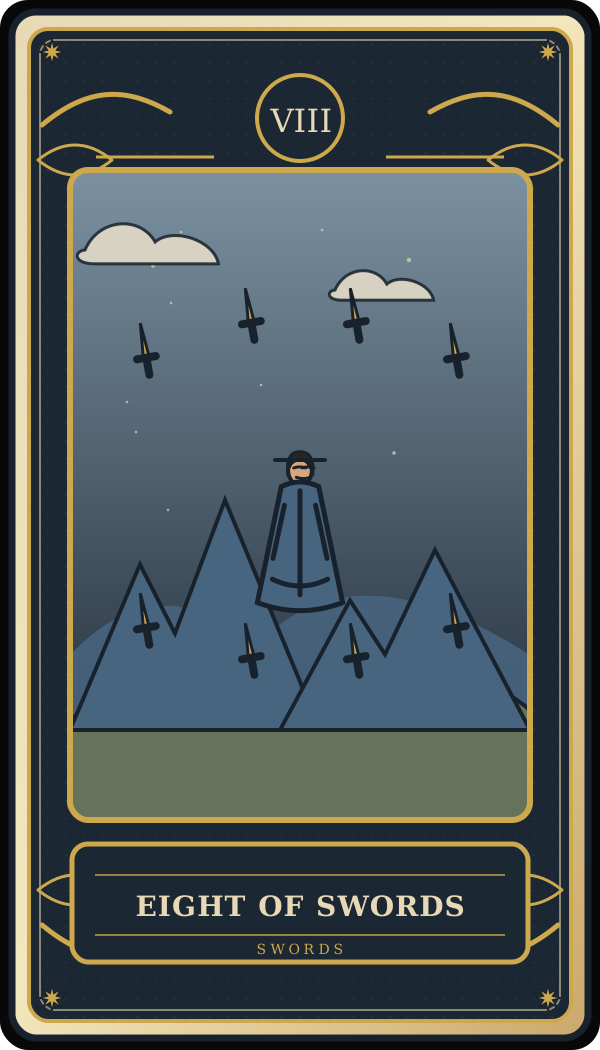
The scene shows a loosely bound figure surrounded by swords on open ground. This imagery matters because tarot meaning is built from relationships between posture, direction, landscape, objects, and atmosphere—not from a keyword alone. The tarot symbolism guide explains how to turn visible details into a coherent interpretation.
Blades
The symbol reinforces the card’s central tension between Restriction and New perspective.
A loosely bound figure surrounded by swords on open ground
The symbol reinforces the card’s central tension between Restriction and New perspective.
Air symbolism
The symbol reinforces the card’s central tension between Restriction and New perspective.
When this card appears, begin with what is visibly happening in the image. Then connect that action to the spread position. A card in an obstacle position will not read exactly like the same card in an advice or outcome position.
Direct expression
Eight of Swords upright meaning
The Eight of Swords brings thought, communication, conflict, and decision-making into the eight stage of the Minor Arcana. Its core pattern is restriction, anxious thinking, perceived powerlessness, limitation. Read it as a condition you can observe and respond to, not a fixed prediction.
Upright, the card brings restriction, anxious thinking, perceived powerlessness, limitation into focus. Use the process in how to read tarot cards to connect that energy to the exact question and spread position. Look for the part of the situation where this energy is already available. The reading becomes useful when you identify a decision, conversation, habit, or opportunity that can express the constructive side of the card.
The upright position is not automatically good. Strong energy can still be poorly timed or overused. Read the surrounding cards to see whether the theme is supported, challenged, delayed, or asking for moderation.
Blocked or altered expression
Eight of Swords reversed meaning
Reversed, the Eight of Swords can point to new perspective, self-release, confronting fear, agency. The underlying air energy may be blocked, exaggerated, delayed, or expressed without enough awareness.
A reversed card can operate in several ways: the energy may be internal, delayed, excessive, avoided, or beginning to correct itself. Our upright versus reversed tarot guide shows how to test each possibility without assuming a reversal is automatically negative. For the Eight of Swords, test these possibilities against the real situation rather than choosing the most dramatic interpretation.
Useful questions include: Where is the energy stuck? What is being overdone? What is happening privately? What practical change would allow the healthier upright quality to emerge?
Relationships
Eight of Swords love meaning
In a love reading, the Eight of Swords emphasizes communication, assumptions, truth, conflict patterns, boundaries, and decisions that cannot be postponed; the eight adds intensification, movement, mastery, or restriction. Compare this card-specific message with the wider tarot love meanings framework, which separates attraction, emotional availability, intention, behavior, and compatibility.
For an existing relationship
Apply the card to the current pattern between both people: communication, consistency, shared values, emotional safety, or the way conflict is handled. The card does not excuse harmful behavior or replace a direct conversation.
For singles or a new connection
The card may describe what you are ready to experience, the quality of the attraction, or a lesson that will help you recognize a healthier match. Reversed, check whether hope, fear, chemistry, or past experience is distorting what the person has actually shown.
Reversed in love
The reversed keywords—new perspective, self-release, confronting fear—may describe the difficult side of the connection. Ask whether the issue is a temporary block, a repeated pattern, a missing boundary, or a mismatch that needs honest acknowledgment.
Work and resources
Eight of Swords career and money meaning
For career, the Eight of Swords points toward analysis, negotiation, competition, policy, communication, and the quality of a difficult decision; the eight adds intensification, movement, mastery, or restriction. The tarot career meanings guide helps distinguish a temporary work mood from a concrete skill, decision, relationship, or resource issue.
For money, consider contracts, financial decisions, risk analysis, stress, and the stories you tell yourself about security; the eight adds intensification, movement, mastery, or restriction. A tarot card should not replace a budget, contract review, tax advice, or financial professional. Use it to identify assumptions and next questions, then verify the facts.
What observable action would express Restriction without slipping into New perspective?
Emotional context
Eight of Swords as feelings and intentions
As feelings, this card may reflect mental preoccupation, guardedness, anxiety, curiosity, resentment, or a need for clarity; the eight shows intensification, movement, mastery, or restriction. Read it alongside the tarot feelings guide, and keep feelings separate from observable behavior or promises.
As intentions, it can suggest a wish to question, decide, confront, protect, explain, or gain intellectual control; the eight shows intensification, movement, mastery, or restriction. Intentions are not promises. Give more weight to respectful communication, repeated behavior, and clear agreements than to any private-state interpretation.
Character and shadow
Eight of Swords as a person
As a person, the Eight of Swords may describe someone who expresses restriction, anxious thinking, perceived powerlessness. At their best, they embody the card’s constructive pattern in a recognizable way.
In shadow, the same person may lean toward new perspective, self-release, confronting fear. This does not label a person permanently; it describes a style, role, or current expression that can change.
Next step
Eight of Swords as advice
As advice, the Eight of Swords asks you to separate fact from fear, choose precise language, and make the decision you can defend honestly. Pay attention to intensification, movement, mastery, or restriction.
Its spiritual lesson concerns discernment, truthful self-observation, and release from thought patterns that masquerade as certainty, expressed through intensification, movement, mastery, or restriction. The most grounded use of this message is to choose one action you can complete, observe the result, and adjust rather than demanding certainty in advance.
Journaling prompts
- Where is Restriction already present in this situation?
- How might New perspective be shaping my interpretation?
- What fact, conversation, or boundary would make the next step clearer?
Read with other cards
Eight of Swords combination clues
With supportive cards, the Eight of Swords can strengthen themes of restriction, anxious thinking, perceived powerlessness. With difficult cards, it may expose the cost of new perspective, self-release, confronting fear.
Look for repeated elements, numbers, court roles, or directional imagery. The tarot card combinations guide explains how to combine cards into one sentence instead of stacking unrelated definitions. A nearby Major Arcana card may broaden the lesson, while a Minor Arcana card often shows the concrete behavior or circumstance through which the theme is expressed.
Useful answers
People Also Ask About the Eight of Swords
What does the Eight of Swords tarot card mean?
The Eight of Swords centers on restriction, anxious thinking, perceived powerlessness, limitation. Its precise message depends on the question, card position, surrounding cards, and whether the energy is direct, blocked, excessive, or internalized.
What does the Eight of Swords mean upright?
Upright, the Eight of Swords highlights the Eight of Swords brings thought, communication, conflict, and decision-making into the eight stage of the Minor Arcana. Its core pattern is restriction, anxious thinking, perceived powerlessness, limitation. Read it as a condition you can observe and respond to, not a fixed prediction. Read it as an invitation to notice where this pattern is already operating and what conscious response would use it well.
What does the Eight of Swords mean reversed?
Reversed, the Eight of Swords can indicate new perspective, self-release, confronting fear, agency. A reversal does not automatically mean disaster; it often shows delay, imbalance, resistance, private experience, or a need to correct the expression of the card.
What does the Eight of Swords mean in love?
In love, the Eight of Swords draws attention to communication, assumptions, truth, conflict patterns, boundaries, and decisions that cannot be postponed; the eight adds intensification, movement, mastery, or restriction. Consider both the emotional message and the behavior that would confirm it before making a relationship decision.
What does the Eight of Swords mean for someone’s feelings?
As feelings, the Eight of Swords can describe mental preoccupation, guardedness, anxiety, curiosity, resentment, or a need for clarity; the eight shows intensification, movement, mastery, or restriction. Tarot cannot prove another person’s private thoughts, so use this interpretation as a prompt to observe communication and consistent action.
What does the Eight of Swords mean for career and work?
For career, the Eight of Swords emphasizes analysis, negotiation, competition, policy, communication, and the quality of a difficult decision; the eight adds intensification, movement, mastery, or restriction. The strongest reading connects this theme to a specific task, decision, workplace pattern, or professional goal.
Is the Eight of Swords a yes or no card?
The concise answer is: No. The reason matters more than the label, so review the card’s upright and reversed themes and identify what condition would strengthen or weaken the answer.
What advice does the Eight of Swords give?
The Eight of Swords advises you to separate fact from fear, choose precise language, and make the decision you can defend honestly. Pay attention to intensification, movement, mastery, or restriction. Translate that message into one realistic action rather than waiting for the card to make the decision for you.
What is the spiritual meaning of the Eight of Swords?
Spiritually, the Eight of Swords explores discernment, truthful self-observation, and release from thought patterns that masquerade as certainty, expressed through intensification, movement, mastery, or restriction. The card is most useful when its symbolic lesson becomes an honest practice, value, or boundary.
What is the warning of the Eight of Swords?
The warning is to notice when Restriction begins to slide into New perspective. The card asks for proportion, evidence, and awareness of consequences rather than fear.
Why is blades important in the Eight of Swords?
The blades is part of the card’s visual story: a loosely bound figure surrounded by swords on open ground. Read it in relation to the other symbols rather than treating it as a fixed prediction.
How does Restriction become New perspective in the Eight of Swords?
The shift happens when the card’s constructive energy loses proportion, awareness, or practical grounding. Compare the situation’s evidence with the card’s upright strengths and reversed cautions before choosing an interpretation.
Continue reading
Related tarot cards
Use this meaning in context
A tarot card is one part of a reading. Position, question, surrounding cards, personal associations, and real-world evidence all change the interpretation. Use the Eight of Swords as a structured reflection prompt, not as a guaranteed prediction.